


Non-governmental organization (NGO) workers face increasing uncertainties and risks in China and more arrests, such as that of Taiwanese Lee Ming-che (李明哲), could occur, Mainland Affairs Council (MAC) advisers said in their latest report.
Beijing has been tightening its grip on foreign NGOs since the Foreign Non-Governmental Organizations’ Activities Management Act took effect in January, requiring all foreign NGOs operating in China to register with the government, the report said.
The government should respond to Beijing’s hardening stance “cautiously and with subtlety,” and it should have a response strategy ifor the possibility that other Taiwanese activists might be detained, the report said.
China has stepped up its surveillance on foreign NGOs and risks have increased across the board, although organizations engaged in humanitarian relief, poverty relief and community development are somewhat less at risk, they said.
Lee, a staff member at Wenshan Community College in Taipei and volunteer at the NGO Covenant Watch, used to work for the Democratic Progressive Party. He disappeared on March 19 after entering China from Macau.
The Chinese government later confirmed his detention and on May 26 announced that it had charged him with subversion of state sovereignty.
However, Chinese authorities have not said where Lee is being held or released information about his health, and their actions have had a profound impact on Taiwan’s NGO operations in China, the report said.
According to the report, some advisers said Lee’s case is unique in that his family has refused to make under-the-table deals with the Chinese authorities, a response that is unprecedented for Chinese officials.
Taiwanese NGOs working in China should be more vigilant and cooperate with each other, as the severity of China’s national security enforcement is likely to continue into the future, the report said.
The government should regularly update NGOs on information relevant to the safety of their employees and develop protocols to make cross-strait exchanges by NGOs more predictable, the council’s advisers said.
The government should inform all Taiwanese traveling to China about the potential risks and tips for staying safe, they said.
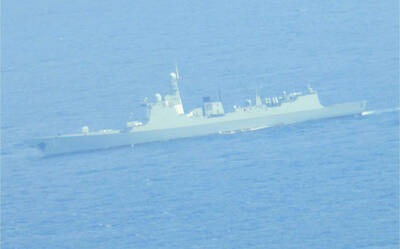
The military has spotted two Chinese warships operating in waters near Penghu County in the Taiwan Strait and sent its own naval and air forces to monitor the vessels, the Ministry of National Defense (MND) said. Beijing sends warships and warplanes into the waters and skies around Taiwan on an almost daily basis, drawing condemnation from Taipei. While the ministry offers daily updates on the locations of Chinese military aircraft, it only rarely gives details of where Chinese warships are operating, generally only when it detects aircraft carriers, as happened last week. A Chinese destroyer and a frigate entered waters to the southwest

The eastern extension of the Taipei MRT Red Line could begin operations as early as late June, the Taipei Department of Rapid Transit Systems said yesterday. Taipei Rapid Transit Corp said it is considering offering one month of free rides on the new section to mark its opening. Construction progress on the 1.4km extension, which is to run from the current terminal Xiangshan Station to a new eastern terminal, Guangci/Fengtian Temple Station, was 90.6 percent complete by the end of last month, the department said in a report to the Taipei City Council's Transportation Committee. While construction began in October 2016 with an
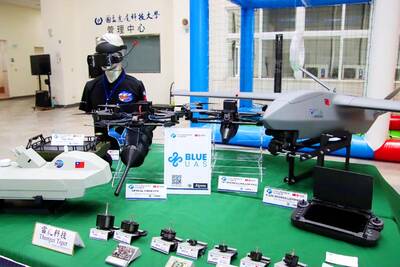
NON-RED SUPPLY: Boosting the nation’s drone industry is becoming increasingly urgent as China’s UAV dominance could become an issue in a crisis, an analyst said Taiwan’s drone exports to Europe grew 41.7-fold from 2024 to last year, with demand from Ukraine’s fight against Russian aggression the most likely driver of growth, a study showed. The Institute for Democracy, Society and Emerging Technology (DSET) in a statement on Wednesday said it found that many of Taiwan’s uncrewed aerial vehicle (UAV) sales were from Poland and the Czech Republic. These countries likely transferred the drones to Ukraine to aid it in its fight against the Russian invasion that started in 2022, it said. Despite the gains, Taiwan is not the dominant drone exporter to these markets, ranking second and fourth

Japanese Prime Minister Sanae Takaichi’s comment last year on Tokyo’s potential reaction to a Taiwan-China conflict has forced Beijing to rewrite its invasion plans, a retired Japanese general said. Takaichi told the Diet on Nov. 7 last year that a Chinese naval blockade or military attack on Taiwan could constitute a “survival-threatening situation” for Japan, potentially allowing Tokyo to exercise its right to collective self-defense. Former Japan Ground Self-Defense Force general Kiyofumi Ogawa said in a recent speech that the remark has been interpreted as meaning Japan could intervene in the early stages of a Taiwan Strait conflict, undermining China’s previous assumptions


 RSS
RSS